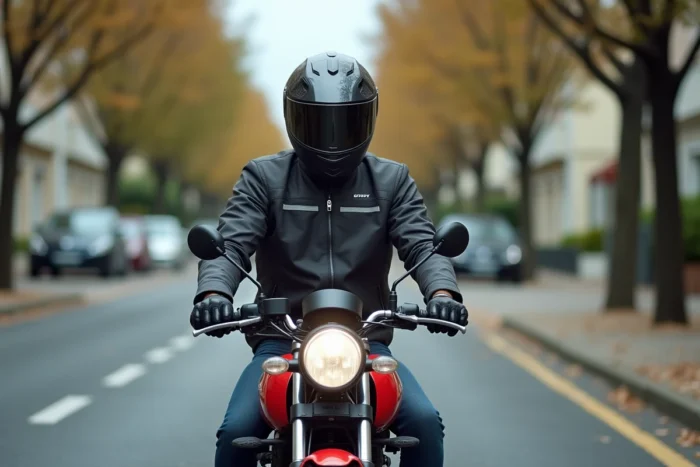
Since 2011, the B license allows you to ride a 125 cc motorcycle or scooter, provided you meet two criteria: a minimum duration of the license and, in most cases, additional training. The regulatory framework seems simple at first glance, but several gray areas persist, particularly regarding insurers and the financing of the training.
125 cc motorcycle insurance and B license: what the regulations don’t say
The texts are clear about the conditions for accessing the operation of a 125 cc. Two years of B license, a seven-hour training course at an accredited driving school, and the legal requirements are met.
Where things get complicated is when it comes to taking out insurance. The seven-hour training certificate has no expiration date in the Highway Code: once obtained, it remains valid indefinitely for riding a 125 with a B license. However, several two-wheeler insurers require this training to be recent (often less than five years) to agree to cover a rider, especially for intensive urban use.
This requirement falls under the commercial policy of each company, not the law. A motorist who completed the training eight years ago can legally ride a 125, but may be denied coverage or offered a significant surcharge. Before purchasing a two-wheeler, checking the conditions for riding a 125 with a B license with their insurer helps avoid unpleasant surprises.
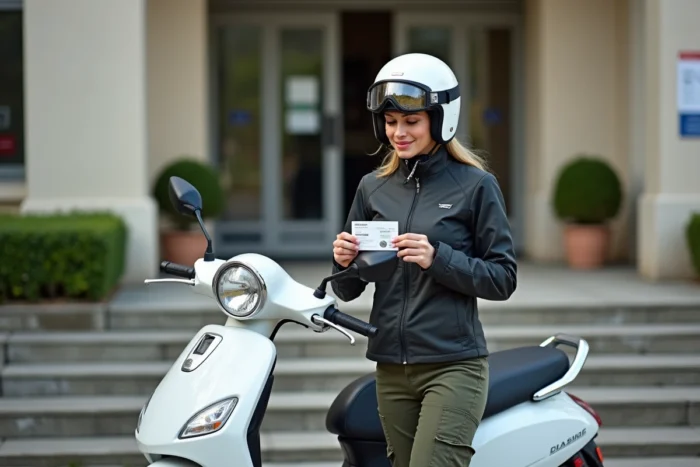
Seven-hour training for the A1 license: what has changed regarding financing
The price of the bridging training varies depending on the driving schools and regions. The subject of pricing is widely covered elsewhere. However, a recent change alters the situation for those relying on external financing.
Since February 20, 2026, the Personal Training Account (CPF) can no longer be freely mobilized to prepare for a light vehicle license (A1, A2, B1, B). Only certain groups remain eligible: people in professional retraining, job seekers, or specific situations defined by decree.
In practical terms, an employee who simply wants to ride a 125 for their daily commutes can no longer, in most cases, finance the seven-hour training through their CPF. This tightening has led to a notable decrease in the use of the CPF for motorcycle training in 2025 and 2026. Financing thus remains the responsibility of the rider, unless in special situations.
Two years of B license and 125 training: the exemptions to know
The general rule imposes two cumulative conditions to ride a 125 cc with a B license:
- To have held the B license for at least two years, without interruption (a cancellation resets the counter to zero)
- To have completed the mandatory seven-hour training, consisting of two hours of theory, two hours of practical exercises, and three hours of road riding
Two exceptions allow for bypassing the training. Holders of a B license obtained before March 1, 1980 can ride a 125 cc without any additional training. This right is automatic and enshrined in law.
The second exemption concerns riders who insured and rode a motorized two-wheeler between January 1, 2006, and December 31, 2010. If a certificate of experience issued by the insurer proves this practice during this specific window, training is not required.
Outside of these two cases, no duration of the B license exempts from training. Having held the license for twenty years means nothing if one has never ridden a two-wheeler during the 2006-2010 period.
Vehicles covered by the B license equivalence
The equivalence is not limited to motorcycles. The B license combined with training also allows you to ride:
- Scooters and light motorcycles from 50 to 125 cc, with a maximum power of 11 kW
- Motorized tricycles of category L5e, whose engine capacity exceeds 50 cc
- Some three-wheeled scooters, provided they fall within category L5e
Confusion is common regarding high-displacement three-wheeled scooters. A model like the Piaggio MP3 400 does not fall under the seven-hour training if its power exceeds 15 kW for tricycles. The available data does not always allow for easy determination, as classification depends on the exact vehicle homologation.
Riding a 125 cc with a B license: the practical limits rarely mentioned
The seven-hour training grants the right to ride, but not necessarily the competence. Seven hours represent a day of training, of which only three hours are in real traffic. For a motorist who has never touched a handlebar, this amount of time remains very short.
The training does not lead to any examination or skills assessment. The certificate is issued at the end of the seven hours, regardless of the trainee’s progress. This point is regularly debated among motorcycle trainers, some arguing that the format does not allow for the acquisition of sufficient safety reflexes for two-wheeled vehicles.
On the ground, feedback varies. Drivers accustomed to car driving adapt quickly to the 125. Others, less comfortable, may need additional hours that the regulatory framework does not provide for. Nothing prevents taking additional lessons at a driving school, but this approach remains voluntary and at the rider’s expense.
One last point concerns the geographical use of the license. The equivalence of the B license to 125 cc is strictly French. It is not recognized in all European countries. Riding in Italy or Spain with a French B license and the training certificate may pose problems during a check or in the event of an accident, depending on local legislation.
Before hitting the road on a 125, checking the coverage of your insurance abroad and the recognition of the equivalence in the destination country remains a precaution that few riders take.