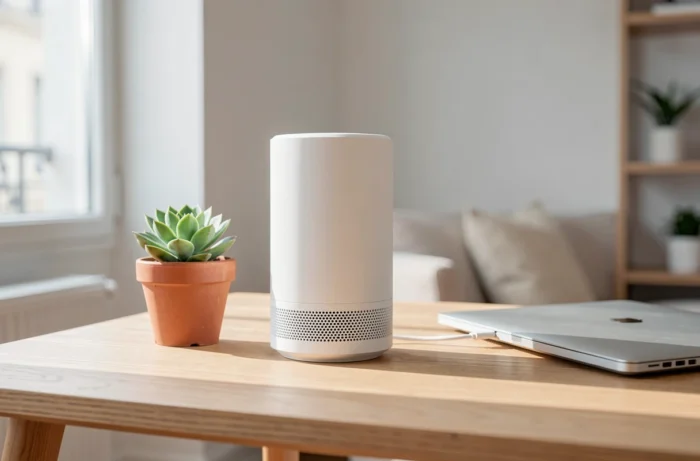
An air ionizer electrically charges suspended particles (dust, pollen, smoke) to weigh them down and make them fall onto the surfaces of the room. This mechanism does not destroy pollutants or trap them in a filter: it merely moves them. Understanding this technical distinction conditions the entire choice of a device suitable for an apartment.
Ionization and HEPA filtration: two purification logics to distinguish
Ionization produces negative ions that attach to suspended particles. Once charged, these particles become heavier and settle on the floor, walls, or furniture. The air breathed in then contains fewer suspended pollutants, but the particles remain present in the room as long as the surfaces are not cleaned.
A HEPA filter purifier works differently: the air passes through a dense membrane that physically retains the particles. They are trapped in the filter, removed from the living space. The filter becomes saturated over time and must be replaced, which generates a recurring cost.
In an apartment, where the air volume is reduced and surfaces are close to each other, an ionizer alone can effectively move particles to the ground. But for someone suffering from allergies, particles deposited on a sofa or shelf remain a problem.
Several recent models combine ionization and filtration, using the electric charge to enhance the filter’s capture. Before making a choice, consulting the Ionizers comparison for apartments allows one to measure the actual performance gaps between these two approaches.
Ozone emissions from ionizers: an underestimated safety criterion
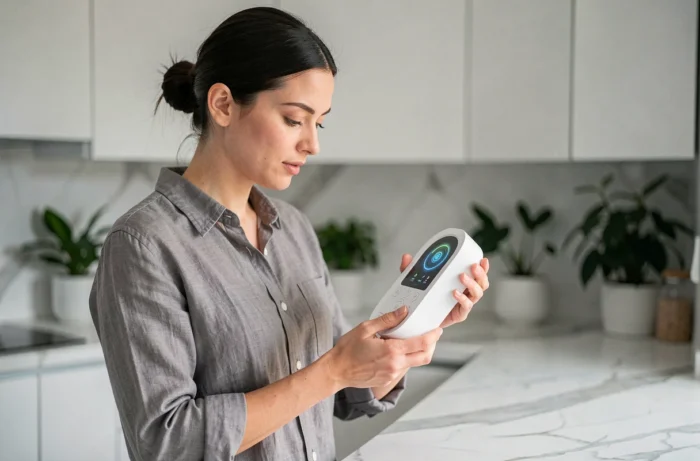
Not all ionizers have the same safety profile. Some types of ionization, particularly bipolar plasma ionization and ozone generators, release ozone as a byproduct of the electric charging process.
Low-concentration ozone irritates the respiratory tract. According to the US EPA, ozone can also react with other pollutants present in the home (volatile organic compounds from new furniture, cleaning products) and produce potentially more harmful secondary compounds than the original pollutants.
The CARB certification (California Air Resources Board) focuses exclusively on ozone emissions and electrical safety. It does not guarantee the purification efficiency of the device. A CARB-certified ionizer means that its ozone emissions remain below a regulatory threshold, not that it purifies correctly.
Identify the type of ionization before purchase
Pure negative ion generators generally produce very little ozone. Electrostatic plate collectors, which attract charged particles to an internal surface, produce more. Devices marketed as “ozone generators” are not purifiers in the strict sense: they target odors and microorganisms, but their use in inhabited enclosed spaces poses a real health problem.
For an apartment occupied daily, prioritizing a negative ion model without active ozone function remains the most cautious recommendation.
Technical criteria for choosing a suitable ionizer for an apartment
Beyond the type of ionization, several technical parameters determine whether a model is suitable for a modest-sized dwelling.
- Covered area and airflow rate: each device indicates a maximum recommended area. In an apartment, the partitioned configuration reduces air circulation between rooms, often requiring the device to be installed in the room where one spends the most time rather than relying on overall diffusion.
- Noise level: a fanless ionizer (like Teqoya) operates almost silently, making it suitable for a bedroom. A purifier combining ionization and HEPA filter uses a fan and produces measurable noise, varying according to the selected speed.
- Maintenance: a pure ionizer without a filter generates no replacement costs. However, it requires more frequent cleaning of the room’s surfaces. A HEPA filter model with integrated ionization requires periodic filter replacement, the price and frequency of which vary by brand.
- Activated carbon: some models add a layer of activated carbon filtration to capture odors and some volatile organic compounds. This addition is relevant in a city apartment where gaseous pollutants (kitchen, furniture, cleaning products) accumulate in a reduced volume.
Ionizer alone or combined purifier: which model for what use in an apartment
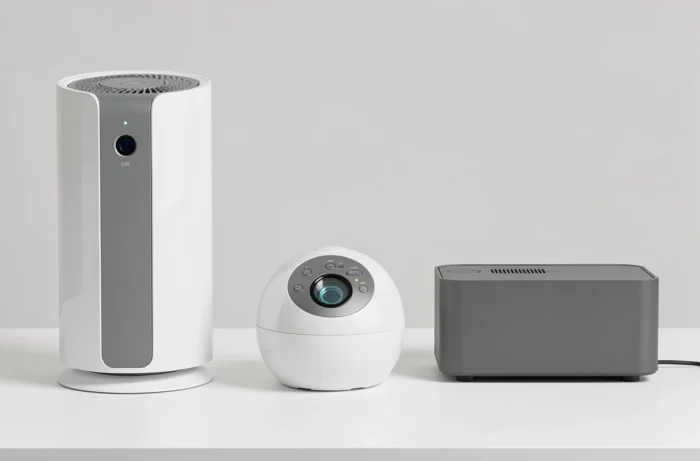
The choice depends on the problem to be solved. A negative ion ionizer without a filter is suitable for someone looking to reduce fine suspended particles and who regularly maintains their interior. The operating cost is almost zero, it operates silently, and the device takes up very little space.
For someone allergic to dust mites or pollen, a purifier with a HEPA filter and integrated ionization actually removes allergens from the air instead of redistributing them on surfaces. The additional cost associated with filters is justified by the physical capture of particles.
In an apartment exposed to urban pollution or kitchen odors, adding an activated carbon filter makes a noticeable difference for gaseous pollutants that ionization alone does not address.
A common trap: confusing certification with performance
A device can display a safety certification (compliant ozone emissions) without providing any data on its actual ability to clean the air. Before purchasing, checking whether the manufacturer publishes a CADR (Clean Air Delivery Rate) or an independent particle reduction test remains the only reliable way to compare two models against each other.
The market for apartment ionizers mixes effective negative ion devices, high-performing combined purifiers, and ozone generators unsuitable for continuous domestic use. The distinction between moving pollutants and removing them from the air remains the structuring criterion for any purchasing decision.