
Brittany concentrates a density of activities, landscapes, and local micro-events that makes any trip planning more complex than it seems. Classic travel guides list iconic places, but they poorly cover last-minute outings, ephemeral markets, or coves accessible only at low tide. Jolie Breizh attempts to address this gap by centralizing operational information about the Breton territory.
Sitemap and search architecture: how category navigation changes things
Most Breton tourism platforms organize their content around geographical destinations (Côtes-d’Armor, Finistère, Morbihan) or classic formats (top 10, essentials). This approach works for initial scouting, but it reaches its limits when searching for a specific activity within a limited radius.
Exploring search on Jolie Breizh allows for a different approach to the territory, by theme or type of activity rather than by administrative division. This sitemap logic makes visible content that menu navigation does not always highlight.
The principle is simple: instead of starting from a department to drill down to an activity, we start from a need (nature walk, family outing, Breton market, wild beach) to find the places that meet it. The difference may seem minor, but it profoundly changes the results obtained.
Local search in Brittany: the limits of generalist aggregators
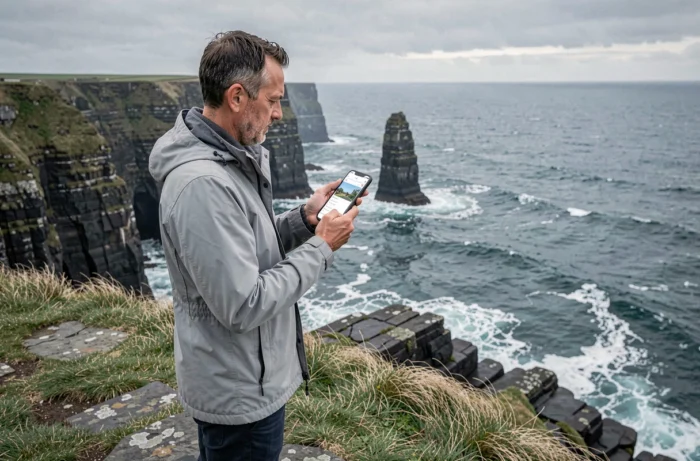
Google Maps, TripAdvisor, or even departmental tourist offices function as aggregators. They index a large volume of points of interest, but the hierarchy relies on popularity or reviews. The most visited places rise to the top, while local gems remain buried.
Jolie Breizh adopts a different approach: centralizing last-minute outings and activities (markets, festivals, sheltered beaches, typical restaurants) in one place. The stated goal of its creators is to connect visitors with ultra-local and up-to-date information, not with a popularity ranking.
Field feedback varies on the completeness of this type of participatory platform. Some very touristy areas (Saint-Brieuc Bay, Emerald Coast) are better covered than the inland regions. For effective searching, cross-referencing Jolie Breizh with a complementary tool remains relevant.
Three filters that change the quality of results
- Filter by timing: an activity valid at high tide is no longer so six hours later. Platforms that incorporate this data (tide times, occasional events) provide much more usable results than a static listing.
- Filter by family accessibility: a wild walk in the Traouïero Valley does not have the same level of difficulty as a stroll on Milliau Island. Specifying the target audience (families with young children, experienced hikers) avoids disappointments on-site.
- Filter by actual season, not by calendar season: Brittany has its own rhythms. A Breton festival can take place in October, a beach may be more enjoyable in September than in July. Brittany’s seasonality does not align with the school calendar, and good research takes this into account.
Emerging Breton platforms: a developing ecosystem
Jolie Breizh is not alone in this niche. The Vibreizh app, created by a self-taught developer, offers to discover Brittany through thematic routes and regional challenges. The listing of restaurateurs, hosts, artisans, and associations is free, which enhances the visibility of small players who are less present on classic sites.
Vibreizh offers an annual subscription of 29 euros for access to more complex routes and a “grand regional challenge” covering the entire territory. This gamification logic does not exist in traditional guides and attracts a different, younger, more mobile audience.
Wonderful Breizh, another recent player, focuses on an interactive map with geolocation and an integrated travel diary. Its positioning is closer to a field application, usable without a connection in white zones (and there are still many in inland Brittany).
What these tools share and where they diverge
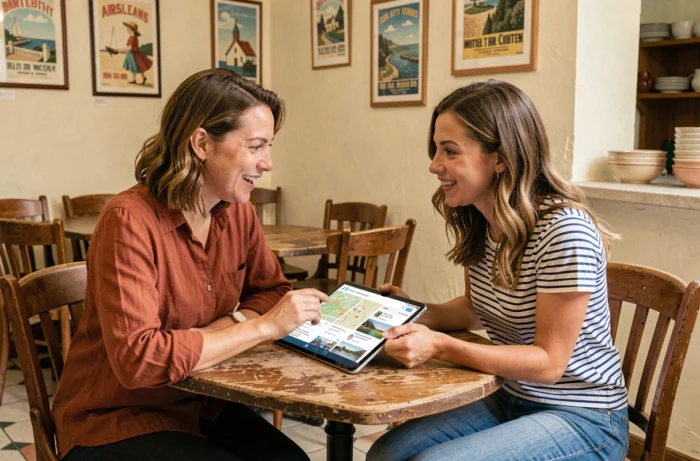
All these projects start from the same observation: visitors are looking for operational information, not yet another ranking. The divergence lies in the method. Jolie Breizh favors structured editorial content, Vibreizh focuses on play, and Wonderful Breizh on real-time mapping.
None of these tools yet cover all five Breton departments with the same depth. Digital exploration of Brittany works better when combining multiple sources rather than relying on a single one.
Optimizing your tourist search in Brittany: a concrete method
Starting with the sitemap of a platform like Jolie Breizh provides a global view of available content, categorized by theme. This step prevents missing categories that one might not have thought to search for (Breton crafts, nature outings in winter, night markets).
Then refine with a narrow geographical criterion. Searching “family walk Trégor” is more effective than “what to do in Brittany”. The more precise the query, the more local platform results surpass those of generalist aggregators.
Checking the last update date of the consulted content remains a reflex to adopt. A blog post written three years ago may recommend a closed restaurant or a now-prohibited trail. Participatory platforms updated by local contributors have a clear advantage in this regard, even if geographical coverage remains uneven.
Brittany’s tourism is gradually digitizing, with tools becoming more precise each season. The quality of a stay often depends on the quality of the research conducted beforehand, and local platforms today offer a complement that major portals do not provide.