The spring-summer and autumn-winter 2026 fashion shows outline a wardrobe where texture takes precedence over logos, where volume replaces fitted cuts, and where the consumer composes their own clothing grammar. The fashion trends of this season are not just a checklist of items: they reflect a relationship with clothing that prioritizes feel and durability over immediate visual impact.
Cocoon fabrics and tactile experience: the purchasing criterion that redefines style
The choice of clothing increasingly hinges on touch before aesthetics. According to analyses by FashionUnited, drawing on data from WGSN and the consulting firm Quad, a very high proportion of Millennials and Gen Z condition their purchases on material feel. This shift directs the autumn-winter 2026 collections towards plush textures, reliefs, and peach skin effects.
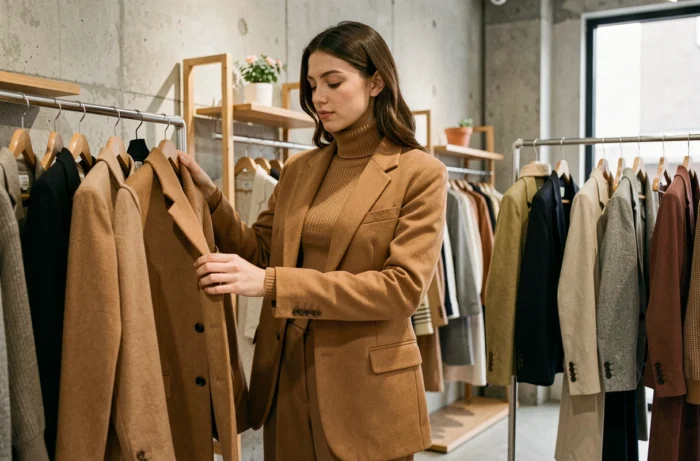
Volumes are amplifying season after season. We are talking about enveloping silhouettes, oversized coats lined with boucle wools, and thick knits with pronounced twists. The idea is not just to keep warm, but to offer a sensory experience from the moment of trying on.
This phenomenon has a direct consequence on how to build a personal style. A coat with a marked texture is enough to anchor an entire outfit. It becomes possible to find fashion on ComplexInfo by exploring this material-focused approach rather than just color or cut alone.
Field reports diverge on one point: does this cocoon trend lead to more sustainable purchases or to an accumulation of emotionally charged pieces that are quickly discarded? There is still a lack of hindsight to make a definitive judgment, but the question deserves to be asked in light of brands’ enthusiasm for these textures.
Autumn-winter 2026 fashion trends: personalization over imposed silhouettes
The Modern Dispatch and The Cultural Review describe a paradigm shift in the presentation of trends. Collections no longer offer ready-to-wear looks, but style manuals where the consumer assembles their own combinations. The unique piece gives way to a clothing system.
This logic explains why some trends seem contradictory. Premium military styles coexist with open-toe ballerinas, raw denim is worn with soft suede, and burgundy mixes with khaki. The common thread is not the stylistic coherence of a fashion show, but each individual’s ability to articulate heterogeneous pieces.
How this approach changes shopping
A consumer oriented towards personalization is not looking for the trendy piece of the moment. They are looking for the piece that integrates with what they already own. The brands that perform well in the autumn 2026 season are those that present their clothing in multiple wearing contexts, not in a single fixed staging.
Retail analyses confirm a cautious behavior: buyers prioritize the style/price ratio, compare more, and seek versatile pieces rather than single-use items. The term that recurs in market studies is “smart value”.
Key colors and cuts of the season: what the runways translate into everyday life
Spring identifies several strong themes for the autumn 2026 season:
- The barrel jean, a loose fit slightly tapered at the bottom, is emerging as an alternative to slim and wide-leg styles. Its shape allows for structuring the silhouette without constraining it, aligning with the trend of controlled volumes.
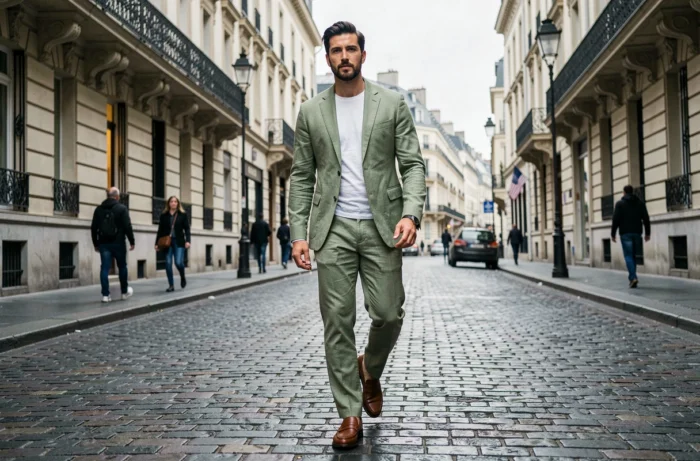
- The autumn palette revolves around burgundy, khaki, olive green, and brown, with brighter touches in accessories. Butter yellow, already present in spring, continues as accents in autumn outfits.
- Premium military style is distinguished from classic surplus by tailored cuts, noble materials (wool, smooth leather), and refined finishes. It is not about reproducing the uniform but extracting codes (patch pockets, structured collars, metal buttons).
- Shoe details (perforations, buckles, cutouts) replace minimalist models. Open-toe ballerinas and strappy boots illustrate this trend.
Adapting these trends to a unique style
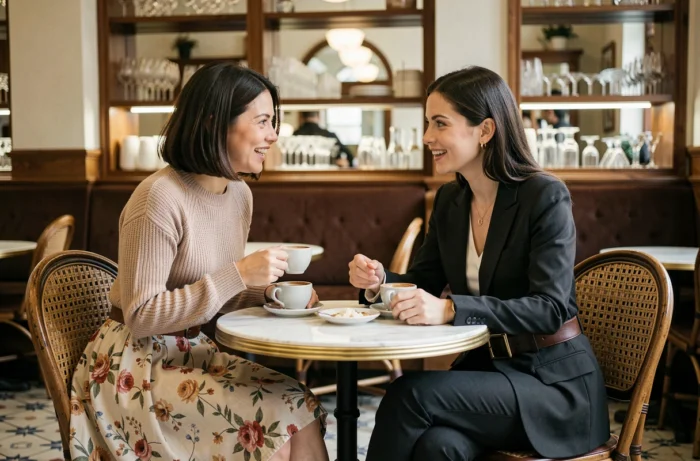
The trap would be to adopt all these directions simultaneously. A barrel jean worn with a military jacket and open-toe ballerinas creates a catalog effect. Choosing one or two themes and deepening them remains the best strategy to assert a personal style this season.
Someone who focuses on the tactile dimension will choose a textured cocoon coat and thick knits, keeping the bottom of the outfit understated. Someone drawn to military inspiration will build their wardrobe around khaki and burgundy tones, with structured pieces and smooth materials.
European regulation and sustainable fashion claims: what changes for the consumer
Behind the shop windows, a European regulatory framework is being established. The European directive on environmental claims (EU Green Claims Directive) and the ESPR regulation are gradually requiring fashion brands to justify any mention of sustainability with verifiable data. Several deadlines are spread between 2026 and 2028.
For those seeking a sustainable style this season, this means that labels like “eco-friendly” or “sustainable” without proof will gradually disappear. In contrast, compliant brands will provide more precise information about the origin of materials, measured environmental impact, and estimated lifespan of garments.
The textile sector is undergoing significant adaptation in response to these new requirements. Some brands are anticipating deadlines, while others are waiting until the last moment. For the consumer, the practical consequence is simple: a garment that displays quantified data about its impact is more likely to be reliable than a garment that merely carries a generic label.
This season’s fashion trends can be read on two levels. On the surface, cuts, colors, materials. On a deeper level, a relationship with clothing that is evolving towards more personalization, more sensoriality, and soon more regulatory transparency. Adopting a unique style this season is less about following a checklist of items than about defining one’s own criteria for choice, whether tactile, aesthetic, or ethical.